
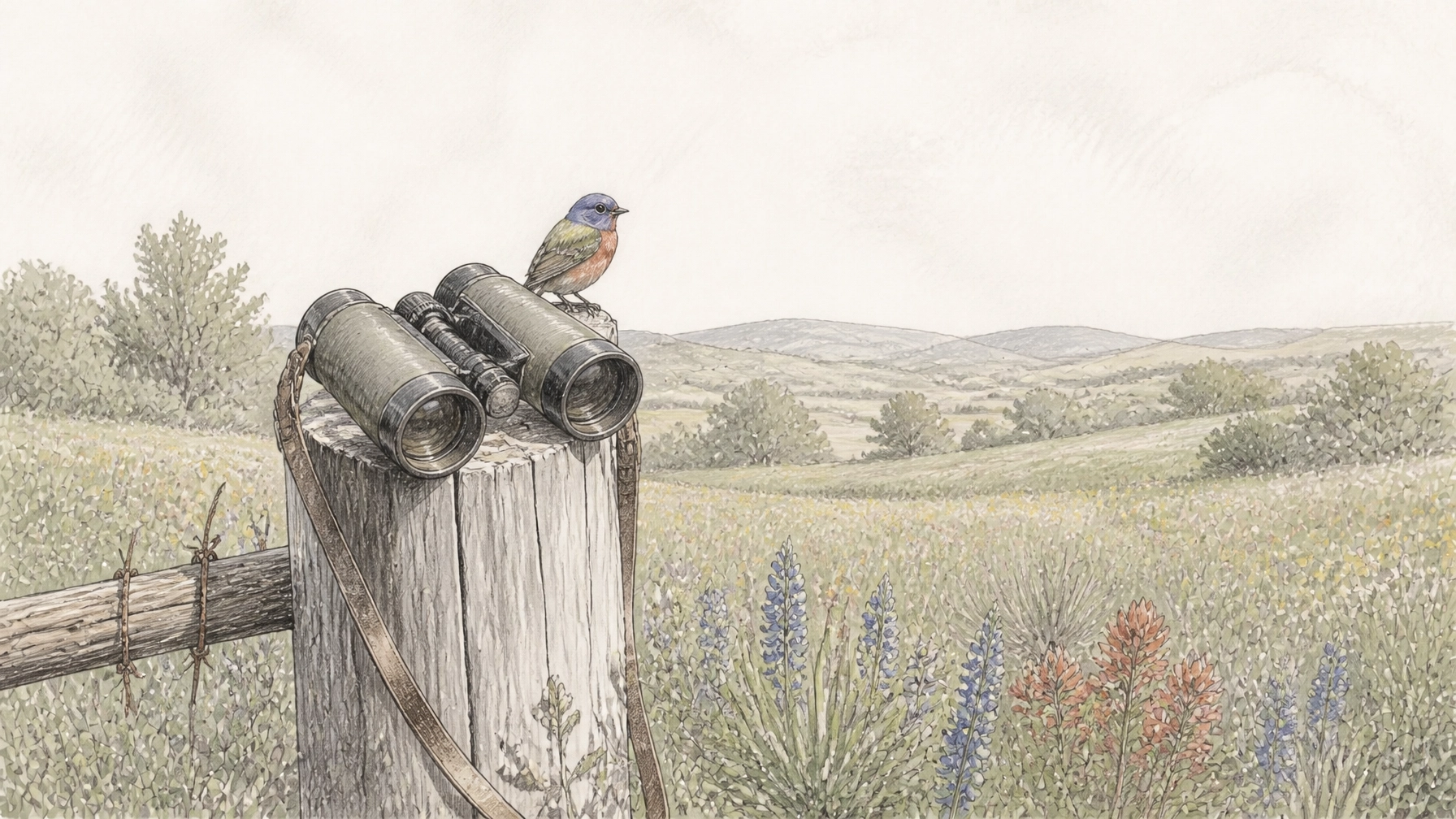
For many people, retirement is not about filling every hour with activity. It is about having the freedom to notice more: the changing light over a limestone ridge, the sound of a wren in the brush, or the sudden flash of a painted bird moving through the trees.
Birdwatching offers an especially rewarding way to experience the Texas Hill Country. It combines gentle outdoor movement, quiet concentration, seasonal discovery, and opportunities to meet people who share an appreciation for the land. For retirees and pre-retirees considering a nature-focused lifestyle near Austin, Fredericksburg, Boerne, or San Antonio, birding can become a meaningful part of everyday life.
Why the Hill Country Is a Birdwatching Destination
The Hill Country brings together several habitats in a relatively compact region: oak and Ashe juniper woodlands, limestone canyons, prairie, springs, creeks, and river corridors. That variety supports both year-round resident birds and species that pass through during migration.
The region is also important for conservation. The Balcones Canyonlands National Wildlife Refuge was established in part to protect nesting grounds for the endangered golden-cheeked warbler and the black-capped vireo. The refuge includes approximately 10 miles of foot trails and observation areas where visitors can experience native wildlife and Hill Country scenery.
Birdwatching does not require a strenuous hike or an expensive collection of equipment. A pair of binoculars, comfortable walking shoes, water, and a small notebook may be enough to begin. The most important tool is patience.

Five Hill Country Places to Explore
1. Balcones Canyonlands National Wildlife Refuge
Northwest of Austin, Balcones Canyonlands offers a rugged landscape of canyons, juniper-covered hills, and open overlooks. It is a particularly meaningful destination for birders who want to connect their outdoor hobby with habitat conservation.
The refuge recommends observation decks, nature trails, binoculars, and even journaling as ways to slow down and engage with the landscape. Before visiting, review the refuge’s visitor information, since access, trail conditions, and seasonal opportunities can vary.
This is a good choice for a morning outing followed by lunch or an afternoon in nearby Marble Falls or the Highland Lakes area.
2. Pedernales Falls State Park
Located about 30 miles west of Austin, Pedernales Falls State Park pairs river scenery with several ways to enjoy the outdoors. The park offers birdwatching, a bird blind, a butterfly garden, picnic areas, and trails ranging from easy to challenging.
For a slower-paced visit, the half-mile Twin Falls Nature Trail leads to a scenic overlook. More ambitious hikers can consider longer routes such as Wolf Mountain Trail, but retirees should evaluate elevation, heat, footing, and current trail conditions before choosing a route.
The park also provides a bird checklist, making it easier to turn a casual walk into a personal seasonal record. Reservations are recommended because the park may reach capacity, particularly during spring, summer, and fall.
3. Guadalupe River State Park
Guadalupe River State Park offers four miles of river frontage and 13 miles of hike-and-bike trails. The River Overlook Trail is only 0.3 miles and provides a short route to a scenic view, while the Painted Bunting Trail covers 2.86 miles.
The park’s combination of riverbank, live oak, prairie, and woodland habitats creates opportunities to look for different species during the same visit. Its bird checklist can help visitors learn which birds are likely to appear in each habitat.
Guadalupe River State Park also offers ranger programs, a Discovery Center, and guided Honey Creek tours. For retirees, those educational options can add structure and social connection to an otherwise independent outing. The park notes that an all-terrain wheelchair may be available, subject to arrangements with staff.
4. Garner State Park
In the Frio River area, Garner State Park includes bald cypress along the river, pecan groves, and dense Ashe juniper forests. Those varied habitats support species such as Vermilion Flycatchers, Black-capped Vireos, and the golden-cheeked warbler.
The visitor center pollinator garden and bird blind may be especially appealing for people who prefer stationary viewing or want to limit the distance they walk. Garner also offers the broader appeal of a classic Hill Country getaway, with river scenery, nearby small-town destinations, and opportunities for a weekend trip.
5. South Llano River State Park
For birders who value comfortable viewing areas, South Llano River State Park deserves consideration. Texas Parks and Wildlife includes it among the state parks with birding infrastructure such as observation platforms, shelters, or blinds.
The park’s river corridor and woodland habitat create a peaceful setting for a full day outdoors. Its location also makes it a natural stop for retirees exploring the western Hill Country around Junction, Sonora, and the Edwards Plateau.
Texas Parks and Wildlife maintains a broader state park birding resource, including checklists, birding events, and information about park blinds.

When to Plan a Birding Outing
Birdwatching changes with the calendar, which gives retirees a reason to return to familiar parks throughout the year.
- Late February through May: Spring migration brings warblers, vireos, flycatchers, tanagers, orioles, and hummingbirds through Texas. Many birders focus on mid-April through early May, when migration can be especially active.
- Late March through June: Hill Country breeding birds become more visible and vocal. The golden-cheeked warbler is one of the region’s best-known specialties.
- July through November: Fall migration begins gradually, with some species departing as early as July. The main movement often becomes more noticeable from late August through November.
- December through February: Winter visitors join year-round residents. Cooler temperatures can also make morning walks more comfortable than summer outings.
For a day-by-day view of migration activity, the BirdCast migration forecast uses radar-based data to track movement across the United States. Travis Audubon’s migration guide also explains how different birds move through Central Texas at different times.
Weather matters in the Hill Country. Before visiting, check park alerts, bring adequate water, avoid the hottest part of the day, and remember that flash flooding can occur near rivers and creeks.
Finding Community Through Birding
Birdwatching can be solitary, but it does not have to be. Local clubs and conservation groups often organize walks, identification sessions, habitat projects, and seasonal events.
Dripping Springs Birding Club helped the city receive its Bird City Texas designation in 2022. The community, located southwest of Austin, is recognized for its natural areas, birding opportunities, and efforts to protect bird habitat.
Texas Parks and Wildlife also maintains a calendar of birding events. These programs can be a useful introduction for beginners who want to learn from experienced birders without committing to a formal course.

A Mindful Rhythm for Retirement
Birdwatching encourages a different pace from many modern routines. Instead of measuring a walk by distance or speed, the birder may measure it by observations: three woodpeckers, a hawk circling overhead, or a new song recognized for the first time.
That rhythm can support an active and mindful retirement lifestyle. It encourages regular movement without requiring every outing to be strenuous. It also creates small goals: learning a species, visiting a new park, improving identification skills, or completing a seasonal checklist.
Most importantly, birding can become part of a broader vision for Hill Country living. A retirement plan should account not only for housing and daily expenses, but also for the experiences that make a chosen location feel like home. For some households, that may include park passes, weekend drives, binoculars, outdoor gear, community memberships, and time for frequent nature outings.
The Texas Retirement Journal’s coverage of wellness-oriented Hill Country living explores this larger connection between place, activity, and quality of life. Birdwatching is one modest but powerful example: a hobby that can turn a scenic retirement setting into a daily source of curiosity and connection.
Schedule a private meeting with a fiduciary financial advisor today by calling (512) 593-8380 or by visiting: https://calendly.com/portafoliocapital/15min
Portafolio Capital Management dba Mau Sanchez Capital is a Registered Investment Adviser. This content is for informational purposes only and does not constitute investment advice or a solicitation to buy or sell any security. Advisory services are provided only pursuant to a written advisory agreement.
To learn more about fiduciary retirement planning and investment management, visit Mau Sanchez Capital or call (512) 593-8380.
This article may include stories, scenarios, and perspectives created or assisted by artificial intelligence. Although the individuals and circumstances described may be fictional, the topics are intended to reflect real financial, personal, and lifestyle issues that retirees and individuals commonly face.
The content is provided to encourage readers to consider different perspectives that may affect their retirement, regardless of whether they are currently planning, approaching retirement, or already retired. It is intended for general educational and informational purposes only and should not be interpreted as personalized investment, financial, tax, legal, medical, or retirement-planning advice.
Individual circumstances vary. Readers should independently verify any information presented and consult appropriately qualified professionals before making financial or personal decisions. No advisory, professional, or client relationship is created through the use of this website.
Leave a Reply