
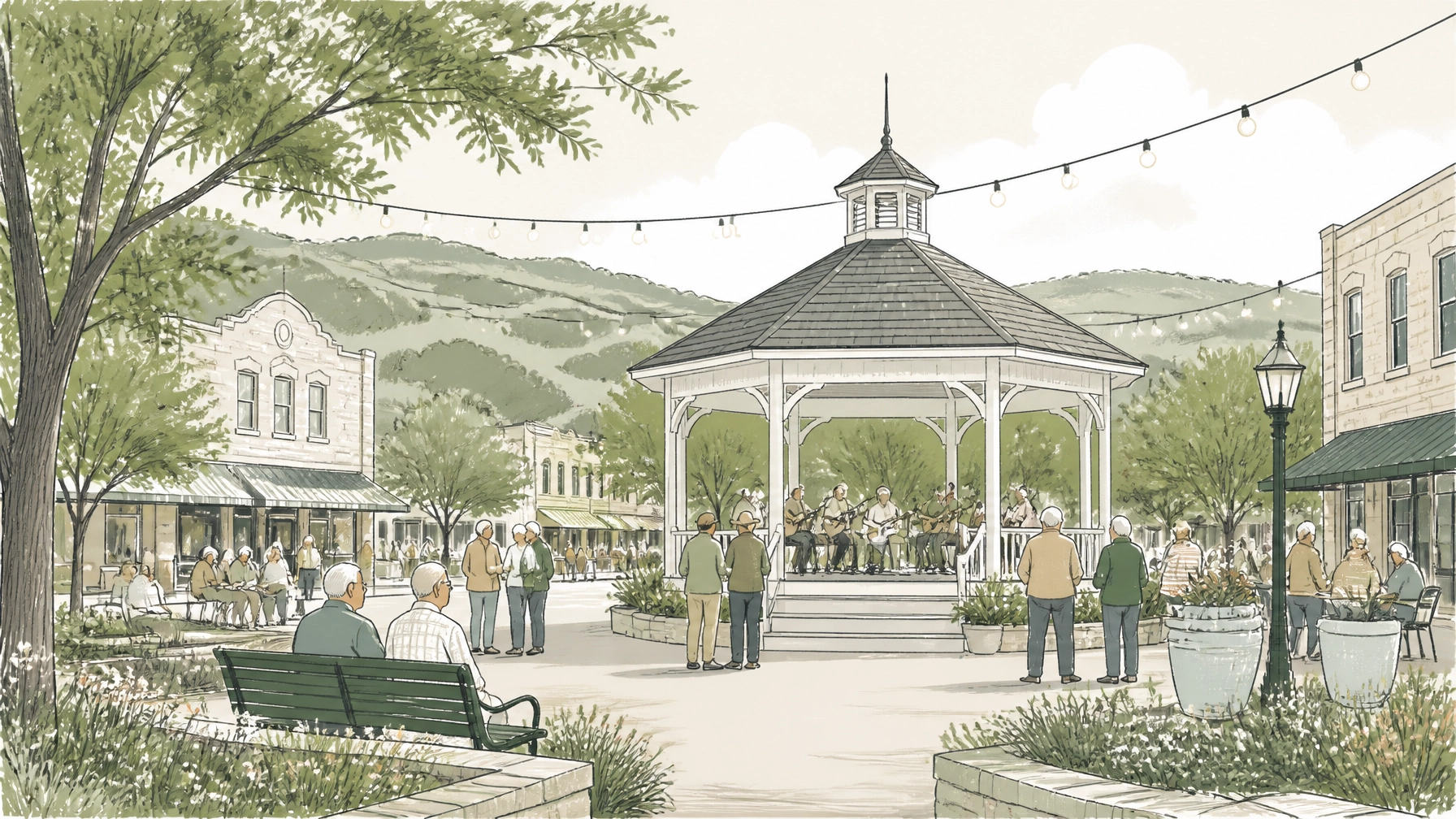
Moving to a small Texas Hill Country town can bring a welcome change of pace: quieter mornings, friendly storefronts, scenic drives, and more time to enjoy the people and places around you.
But a peaceful setting does not automatically create a social life. After relocating, many retirees discover that building community requires intention. The neighbors may be welcoming, but friendships often grow through repeated encounters: at a volunteer shift, a church breakfast, a pickleball court, a farmers market, or a regular coffee table downtown.
The good news is that Hill Country communities offer many natural ways to meet people. Whether you are drawn to local history, outdoor recreation, faith-based groups, music, gardening, golf, or service, you can create a fulfilling circle of friends one connection at a time.
Begin With a Recurring Routine
One-time events can be enjoyable, but recurring activities are usually more effective for building friendships. Seeing the same people regularly makes conversation easier and gives relationships time to develop naturally.
Instead of trying to attend everything, choose two or three activities that fit your personality and schedule:
- A weekly coffee gathering
- A monthly community event
- A regular volunteer shift
- A golf, walking, or pickleball group
- A church class or service ministry
- A standing dinner or game night
Small-town community is often built through familiarity. The first visit may result in only a brief introduction. By the fourth or fifth visit, someone may remember your name, ask where you live, or invite you to join another activity.
That gradual process is normal. You do not need to become socially connected overnight.
Visit the Local Chamber and Community Calendar
A local chamber of commerce or visitor center can be one of the best first stops after moving to a Hill Country town. Ask for more than restaurant recommendations. Request information about:
- Newcomer gatherings
- Civic organizations
- Garden clubs
- Arts groups
- Local festivals
- Public lectures
- Community centers
- Volunteer opportunities
- Recreation programs
Regional resources can also help you discover recurring events. The Texas Hill Country Trail Region highlights cultural, historical, and community activities throughout the area. The Texas Highways Hill Country events calendar is another useful way to look for concerts, markets, festivals, and exhibitions.
In Fredericksburg, the official events calendar can introduce newcomers to wine events, heritage programs, music, seasonal celebrations, and other gatherings. In Wimberley, recurring market events and activities at the community center provide similarly natural opportunities to meet residents.
The important step is not simply finding an event. It is returning to the same type of event often enough to become part of its rhythm.
Try Volunteering Before Joining a Club
Volunteering can be especially effective for retirees who find unstructured social situations uncomfortable. A service project gives everyone a shared purpose, which makes conversation feel more natural.
Consider volunteering with:
- Local food pantries
- Libraries and literacy programs
- Animal shelters
- Historical societies
- Museums
- Community gardens
- Performing arts organizations
- Festival committees
- Youth mentoring programs
- Church service ministries
The Boys & Girls Clubs of the Texas Hill Country serves communities including Boerne, Comfort, and Fredericksburg. Opportunities may vary, but organizations like this often need help with events, mentoring, administrative work, or program support.
You can also contact a local museum, arts organization, or community event directly and ask, “Are there volunteer roles for someone who is new to town?” That question often leads to introductions that are difficult to find through a website alone.
Volunteering has another advantage: it helps you learn the character of your new community. You begin to understand which causes matter locally, who organizes events, and where residents gather to solve problems.

Use Church Groups as a Starting Point
For many residents, churches remain important social anchors in small Hill Country towns. You do not have to limit your involvement to Sunday services. Many congregations offer several ways to connect, including:
- Coffee hours
- Bible studies
- Choirs and music groups
- Community meals
- Book discussions
- Men’s and women’s groups
- Food pantry service
- Home visitation
- Seasonal celebrations
- Outreach programs
If you are visiting a church for the first time, stay for the gathering afterward instead of leaving immediately. Introduce yourself to one person and mention that you recently moved to the area. Longtime members often know which groups are most active and can point you toward a good fit.
A church group can also be a helpful option for widows, widowers, and single retirees who want regular connection without the pressure of a formal social club.
Find Your People Through Golf and Pickleball
Recreation is one of the easiest ways to form friendships because the activity gives people something to talk about. Golf and pickleball are especially popular among active retirees and often include beginner-friendly formats.
Golfers can ask local courses about:
- Men’s or women’s associations
- Weekly scrambles
- Group lessons
- Couples’ events
- Nine-hole leagues
- Member mixers
Pickleball players can check city recreation departments, country clubs, community associations, and indoor facilities. Hill Country Indoor Sports & Fitness in Bee Cave offers adult programming, social leagues, clinics, and open play. Horseshoe Bay Resort’s pickleball program provides another example of organized play in a resort setting.
You do not need to be highly skilled. Beginner sessions and open-play periods are often more social than competitive. If you are uncertain, call ahead and ask whether the group welcomes new players or offers introductory instruction.
The best recreation group is not necessarily the most prestigious one. It is the one you will attend consistently.
Make Room for Arts, Wine, and Local Culture
Community is not limited to clubs with formal memberships. Hill Country towns are filled with informal gathering places connected to art, food, music, and wine.
You might explore:
- Gallery openings
- Artist demonstrations
- Local theater
- Live music nights
- Winery tastings
- Cooking classes
- Farmers markets
- Historic walking tours
- Book talks
- Craft workshops
The Texas Hill Country Wineries event calendar can help you find tastings, dinners, live music, and seasonal programs throughout the region.
These events can be particularly useful for couples who want to meet other couples. Start by attending at a comfortable pace, then look for familiar faces. If you enjoy speaking with another guest, ask a simple follow-up question: “Have you attended this event before?” or “Are there other local gatherings you recommend?”

Create a Small Group of Your Own
Sometimes the community you want does not exist yet: or it is difficult to find. In that case, create something small and easy to maintain.
Ideas include:
- A Wednesday morning coffee group
- A monthly patio dinner
- A walking group
- A dominoes or cards night
- A wine-and-book discussion
- A rotating home-cooked lunch
- A photography outing
- A group visit to a local market
Start with three or four people you have met through other activities. Keep the invitation casual and make the schedule predictable. A standing first-Thursday dinner is easier to remember than an event that changes every month.
You do not need a large social calendar. A few dependable relationships can provide more comfort and connection than a long list of acquaintances.
Give Yourself Time to Adjust
Relocating during retirement involves more than changing an address. You are also replacing familiar routines, neighbors, professional relationships, and possibly family proximity.
Some people make friends quickly. Others need several months before they feel settled. Both experiences are normal.
If you are introverted, begin with activities that have a clear purpose. If you are single, choose structured groups where people expect to meet new participants. If you are part of a couple, consider joining one activity together and one separately so each person can develop independent friendships.
A useful goal is to focus on participation rather than popularity. Attend, introduce yourself, help when you can, and return. Over time, those small actions can turn a new town into home.
A Simple 60-Day Community-Building Plan
Weeks 1–2: Visit the chamber, community center, library, or visitor center. Gather calendars and identify one recurring event.
Weeks 3–4: Attend a church gathering, recreational activity, or newcomer event. Introduce yourself as a recent arrival.
Weeks 5–6: Choose one volunteer opportunity or civic group. Commit to returning at least twice.
Weeks 7–8: Invite two or three new acquaintances to coffee, lunch, a walk, or a local event.
As you build your schedule, remember to leave room for quiet time. A satisfying Hill Country retirement does not need to be crowded. It should reflect the pace, people, and activities that make your life feel meaningful.
For additional lifestyle and retirement perspectives, explore the Texas Retirement Journal retirement resources, including articles on healthy aging, lifestyle choices, and preparing for life in the Hill Country.
Schedule a private meeting with a fiduciary financial advisor today by calling (512) 593-8380 or by visiting: https://calendly.com/portafoliocapital/15min
Portafolio Capital Management dba Mau Sanchez Capital is a Registered Investment Adviser. This content is for informational purposes only and does not constitute investment advice or a solicitation to buy or sell any security. Advisory services are provided only pursuant to a written advisory agreement.
To learn more about fiduciary retirement planning and investment management, visit Mau Sanchez Capital or call (512) 593-8380.
This article may include stories, scenarios, and perspectives created or assisted by artificial intelligence. Although the individuals and circumstances described may be fictional, the topics are intended to reflect real financial, personal, and lifestyle issues that retirees and individuals commonly face.
The content is provided to encourage readers to consider different perspectives that may affect their retirement, regardless of whether they are currently planning, approaching retirement, or already retired. It is intended for general educational and informational purposes only and should not be interpreted as personalized investment, financial, tax, legal, medical, or retirement-planning advice.
Individual circumstances vary. Readers should independently verify any information presented and consult appropriately qualified professionals before making financial or personal decisions. No advisory, professional, or client relationship is created through the use of this website.
Leave a Reply