
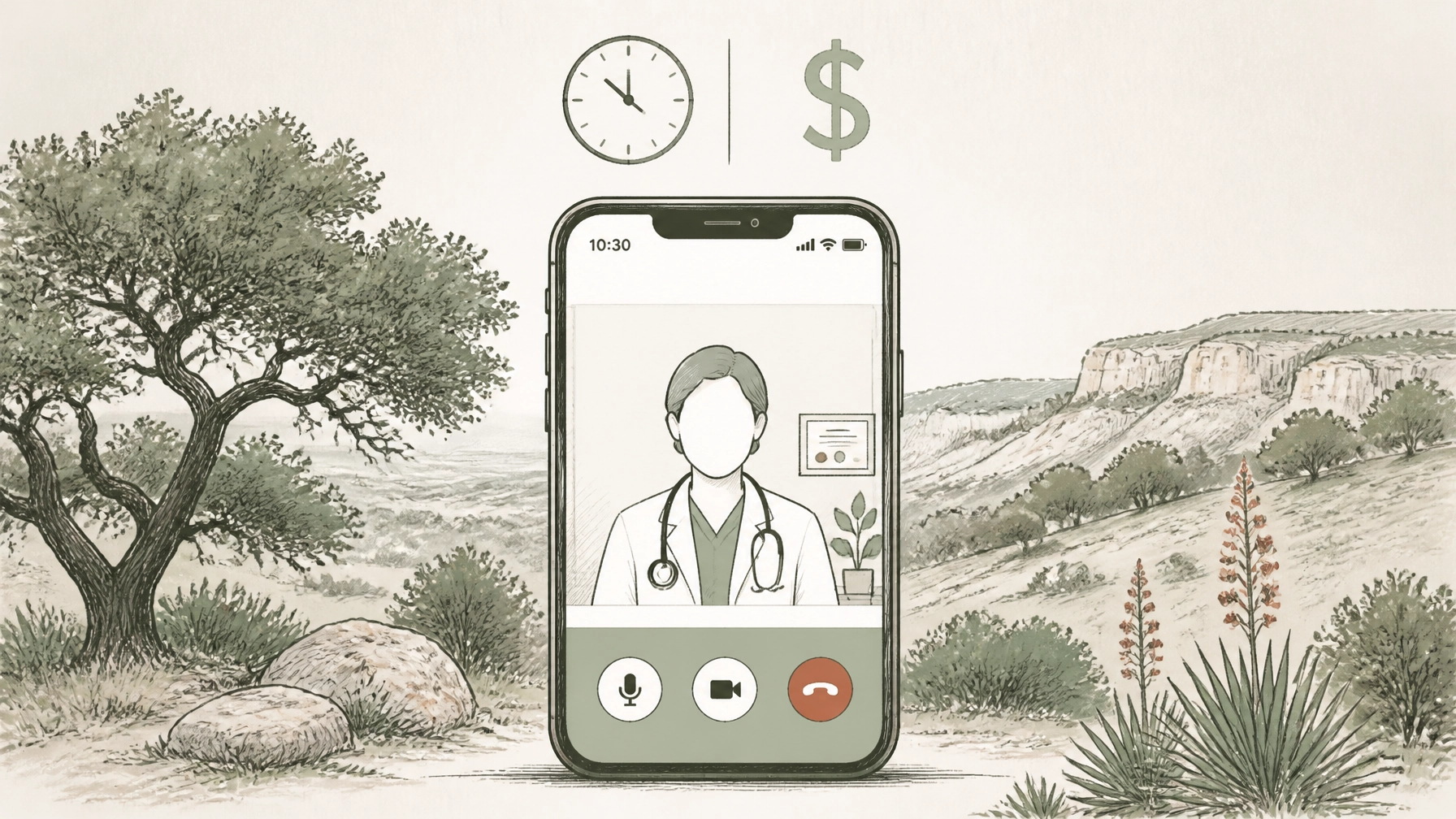
Telehealth can help Texas retirees reduce unnecessary travel, simplify routine care, and make healthcare more accessible: while still leaving room for in-person visits when they are medically appropriate.
For many Texas retirees, healthcare is not only a medical consideration. It is also a lifestyle and budgeting issue.
A routine appointment may require driving across a large county, arranging transportation, taking time away from a spouse or caregiver, and paying for fuel or parking. In rural and suburban parts of the state, the nearest specialist may be an hour or more away.
Telehealth offers another option. Through a secure video visit, phone call, or patient portal, retirees can communicate with certain healthcare providers without leaving home. It is not a replacement for every type of care, but it can be a practical tool for managing time, transportation, and some healthcare expenses during retirement.
Telehealth is becoming part of ordinary healthcare
The use of virtual care expanded significantly during the COVID-19 pandemic, but telehealth has continued as a routine option for many patients and providers.
According to the Texas Medical Association, approximately 75% of Texas physicians reported using telemedicine in a January 2023 survey. Those physicians used telemedicine for about one in 10 visits, on average.
Nationally, telehealth remains particularly relevant for older adults. Recent analysis of federal survey data found that about 31.4% of U.S. adults age 65 and older used telehealth during 2024. Phone-only and video-based appointments were both meaningful parts of that usage.
The Texas-specific data for older adults are limited, so it would be inappropriate to assume that the national percentage precisely represents Texas retirees. Still, the broader trend is clear: virtual visits are no longer limited to major hospital systems or technology-focused patients.
As Texas continues to include both large metropolitan areas and remote rural communities, telehealth may be especially useful for retirees who want to remain in a peaceful Hill Country setting without giving up access to routine medical care.
“It needs to be convenient for them,” said El Paso physician Ogechika Alozie, MD, in the Texas Medical Association article. “After that, it's a question of their clinical condition and can I do what I need over a video camera; but for me it comes down to patient choice.”
How Medicare telehealth coverage works in 2026
Medicare coverage depends on the type of Medicare coverage you have, the service being provided, and the provider’s participation in Medicare.
Under Medicare’s official telehealth guidance, Part B covers certain telehealth services, including some office visits, consultations, psychotherapy, cognitive assessments, diabetes self-management training, medical nutrition therapy, and speech therapy.
Through December 31, 2027, Medicare beneficiaries may receive covered telehealth services from anywhere in the United States, including their homes. Medicare describes several forms of virtual care:
- Video visits: Real-time audio and video communication with a healthcare provider.
- Audio-only visits: Telephone-based care in some circumstances and for certain services.
- E-visits: Non-face-to-face communication through an online patient portal.
- Virtual check-ins: Brief communications that usually last 10 minutes or less.
For Original Medicare, most telehealth services are subject to the same general cost-sharing structure as comparable in-person Part B services. After meeting the Part B deductible, you generally pay 20% of the Medicare-approved amount when the provider accepts assignment. Your Medigap policy, Medicaid eligibility, or other coverage may affect what you ultimately pay.
Medicare Advantage plans may offer additional telehealth benefits, but each plan has its own rules, networks, copayments, and provider requirements. Before scheduling a virtual appointment, ask:
- Is the provider in my plan’s network?
- Is this service covered by my plan?
- What will my copayment or coinsurance be?
- Is the appointment video-based, audio-only, or available through a patient portal?
- Will an in-person visit be required later?
Coverage rules can change, so confirm the details with Medicare, your plan, or your healthcare provider before relying on a particular benefit.
Where telehealth may help Texas retirees

Telehealth works best when the provider can evaluate the issue without a hands-on examination, imaging, or laboratory testing. Common uses may include:
Routine follow-up appointments
A virtual visit may be appropriate for discussing symptoms, reviewing test results, checking progress after treatment, or adjusting a care plan.
For example, a retiree managing blood pressure or diabetes may be able to discuss home readings with a physician without driving to the office for every conversation.
Medication questions
Telehealth may make it easier to discuss side effects, refill questions, medication changes, or concerns about taking several prescriptions. Keep an updated medication list nearby during the appointment.
A virtual visit does not guarantee that a prescription will be changed or renewed. The provider may still require lab work, an examination, or an in-person appointment.
Behavioral health
Counseling and psychotherapy are among the more established uses of telehealth. For retirees who feel uncomfortable driving long distances or visiting a clinic, receiving behavioral healthcare from home may make ongoing appointments easier to maintain.
A quiet, private room is important. If a spouse, adult child, or caregiver is present, the patient should decide who participates and let the provider know.
Nutrition and lifestyle support
Some retirees use virtual appointments for nutrition counseling, diabetes self-management education, or wellness-related follow-up. This can fit naturally into a retirement routine centered on walking, golf, gardening, or other outdoor activities.
Telehealth can support a healthy lifestyle, but it should not be viewed as a substitute for preventive screenings, physical examinations, or emergency care.
How to choose a telehealth provider
Start with your current doctors. Ask whether your primary care provider, specialist, therapist, or clinic offers telehealth. Using an established provider may make it easier to access your medical history and coordinate care.
When comparing providers, consider:
- Whether the provider is licensed to practice where you are located.
- Whether the provider accepts Medicare or your Medicare Advantage plan.
- Whether the platform is easy to use on your phone, tablet, or computer.
- Whether technical support is available before the appointment.
- Whether the provider offers captions, telephone access, large-print instructions, or interpreter services.
- Whether you can include a trusted caregiver with your permission.
- Whether the provider explains when an in-person examination is necessary.
The best telehealth provider is not necessarily the one with the most advanced app. It is the one that communicates clearly, protects your privacy, and uses virtual care only when it is clinically appropriate.
Prepare for a smoother virtual visit

A few minutes of preparation can prevent frustration.
Before the appointment:
- Test your internet connection, camera, and microphone.
- Charge your device.
- Place the device on a stable surface at eye level.
- Find a quiet, well-lit room.
- Have your medication list, recent readings, and questions nearby.
- Wear your glasses and hearing aids if you use them.
- Ask a caregiver to help with technology if you want that support.
- Request written instructions if the provider’s directions are difficult to follow.
Use a private home network rather than public Wi-Fi when discussing personal health information. Keep your device updated, use a screen lock, and be cautious about unexpected messages requesting passwords or payment information. If an appointment link seems suspicious, call the clinic through its usual phone number.
How telehealth can fit into a retirement healthcare budget

Telehealth may reduce some indirect costs, but it does not automatically make medical care inexpensive.
Potential savings may come from:
- Less fuel and fewer parking expenses.
- Reduced need for a caregiver or family member to drive you.
- Fewer missed workdays for a spouse or part-time worker.
- Less time spent traveling to a specialist.
- Earlier communication when a concern might otherwise go unaddressed.
At the same time, you may still owe a deductible, copayment, or coinsurance. Some services may not be covered, and an online appointment could lead to laboratory work, imaging, medication costs, or an in-person follow-up.
A practical retirement healthcare budget can treat telehealth as one access option rather than a guaranteed cost-cutting strategy. Track both the direct appointment cost and the related travel or support expenses. Over several months, this may help you understand where virtual care is genuinely convenient and where traditional appointments remain more suitable.
Healthcare spending is also one reason retirees may benefit from reviewing their broader retirement income plan. At Mau Sanchez Capital, fiduciary financial planning and investment management services are attributed to Portafolio Capital Management dba Mau Sanchez Capital: not to Texas Retirement Journal, which serves as an educational publication.
Know when in-person care is the better choice
Telehealth has limits. A provider may need to examine you physically, check vital signs with clinical equipment, perform a procedure, collect a sample, or order diagnostic testing.

Some health concerns should not wait for a virtual appointment. For severe or rapidly worsening symptoms, contact emergency services or seek urgent in-person care. When in doubt, ask the healthcare provider whether the issue is appropriate for telehealth.
The goal is not to choose virtual care every time. The goal is to use the right setting for the situation.
For Texas retirees, that flexibility can support a more comfortable lifestyle: whether you are living near Austin, spending time in the Hill Country, or enjoying a quieter rural community. Telehealth may help preserve time for family, trails, golf, dining, and the other parts of retirement that make life enjoyable, while keeping healthcare access connected to your daily routine.
Schedule a private meeting with a fiduciary financial advisor today by calling (512) 593-8380 or by visiting: https://calendly.com/portafoliocapital/15min
Portafolio Capital Management dba Mau Sanchez Capital is a Registered Investment Adviser. This content is for informational purposes only and does not constitute investment advice or a solicitation to buy or sell any security. Advisory services are provided only pursuant to a written advisory agreement.
To learn more about retirement living, healthcare considerations, and financial preparedness in Texas, explore the Texas Retirement Journal retirement resources.
This article may include stories, scenarios, and perspectives created or assisted by artificial intelligence. Although the individuals and circumstances described may be fictional, the topics are intended to reflect real financial, personal, and lifestyle issues that retirees and individuals commonly face.
The content is provided to encourage readers to consider different perspectives that may affect their retirement, regardless of whether they are currently planning, approaching retirement, or already retired. It is intended for general educational and informational purposes only and should not be interpreted as personalized investment, financial, tax, legal, medical, or retirement-planning advice.
Individual circumstances vary. Readers should independently verify any information presented and consult appropriately qualified professionals before making financial or personal decisions. No advisory, professional, or client relationship is created through the use of this website.
Leave a Reply