
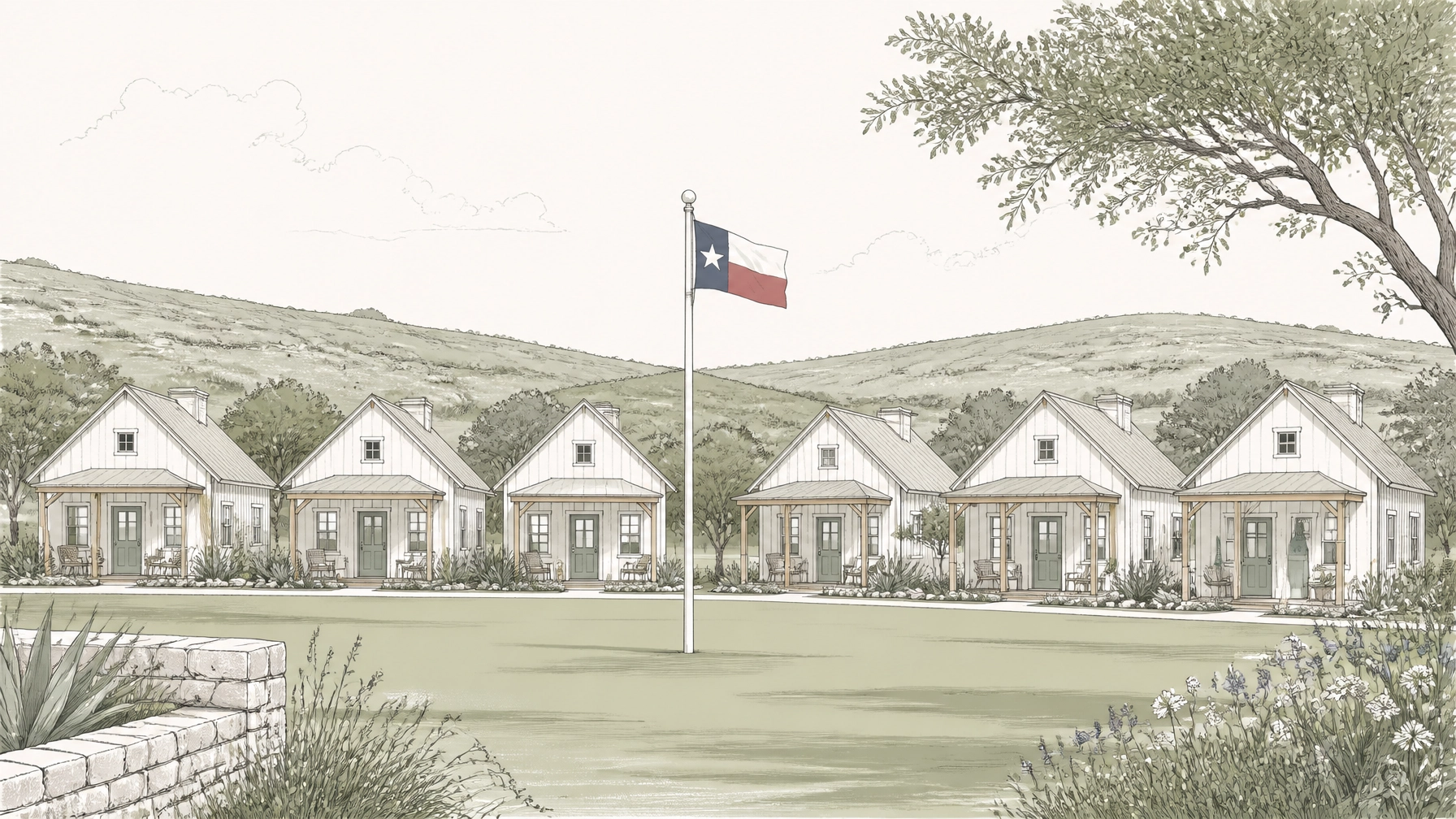
For many Texas retirees, an active adult neighborhood sounds like an ideal middle ground: more social than an isolated country property, less demanding than a large suburban home, and more independent than a traditional senior living setting.
These communities often offer clubhouses, fitness centers, pools, walking trails, golf, pickleball, organized activities, and exterior maintenance services. But the lifestyle comes with trade-offs. Homeowners association fees, community rules, changing neighborhood dynamics, and a narrower resale audience all deserve careful consideration before you buy.
The right question is not simply, “Does this community look attractive?” It is:
“Will this neighborhood still fit the way I want to live five, 10, or 20 years from now?”
What is a 55+ active adult community?
A 55+ community is generally designed for independent adults who want a neighborhood built around recreation, social connection, and convenient living. These communities are different from assisted living or continuing-care facilities. Residents typically own or rent their homes and manage their own daily lives.
Under the federal Housing for Older Persons Act regulations, a community qualifying as housing for older persons generally must have at least 80% of occupied homes with at least one resident age 55 or older. It must also maintain written policies and periodically verify occupancy.
That does not mean every 55+ community has identical rules. Some may permit younger spouses, caregivers, or family members under specific conditions. Others may have stricter age or occupancy requirements. Guest policies, grandchild visits, rental restrictions, and amenity access can also vary significantly.
Before making an offer, request the community’s governing documents rather than relying only on a sales brochure.
The potential benefits of active adult living
1. Amenities are close to home
One of the strongest advantages is convenience. Instead of driving across town for every activity, residents may have access to a clubhouse, pool, fitness center, walking trail, sports courts, or gathering space within the neighborhood.
For an active retiree, this can make it easier to establish a daily rhythm:
- A morning walk on a neighborhood trail
- Pickleball or golf with friends
- An afternoon fitness class
- Coffee or lunch at a community gathering
- Evening events, concerts, or interest-group meetings
Large communities such as Sun City Texas near Georgetown and Kissing Tree in San Marcos demonstrate how extensive the amenity model can become. However, more amenities generally require more upkeep, staffing, insurance, and long-term funding: costs that may appear in monthly dues or future assessments.
2. Social connection can be easier
Moving during retirement can be exciting, but it can also disrupt long-standing friendships and routines. An active adult neighborhood creates more opportunities to meet people who may be in a similar stage of life.
The social benefit is often greatest for retirees who enjoy organized activities, clubs, volunteer projects, group travel, and casual neighborhood interaction. It can be easier to build relationships when residents regularly see each other at the pool, clubhouse, walking trail, or community event.
Still, not every community feels equally social. Some are highly active, while others are quieter and more private. Ask residents how often they participate in activities: not just how many activities appear on the calendar.
3. Less exterior maintenance may create more flexibility
Many communities are designed for low-maintenance living. Depending on the neighborhood and home type, the HOA may handle some combination of landscaping, common-area care, irrigation, exterior painting, roof maintenance, or amenity upkeep.
This can be valuable for retirees who want to spend more time visiting wineries, exploring historic downtowns, traveling, or enjoying family rather than managing a large yard.
The phrase “maintenance-free,” however, should be examined carefully. HOA services may not include:
- Interior repairs
- Appliances
- Utilities
- Homeowners insurance
- Pest control
- Certain trees, irrigation systems, or private landscaping
- Roof or exterior repairs for every type of home
A townhome or attached home may offer a different level of maintenance coverage than a detached single-family house. Ask for a written explanation of what the monthly fee covers.

The trade-offs to consider before buying
HOA fees can change
Monthly HOA dues are not simply an amenity subscription. They help fund the association’s operating costs, reserves, insurance, landscaping, repairs, and shared facilities.
Request the current budget, recent financial statements, reserve information, and a history of fee increases. Also ask whether the association has approved or discussed any special assessments.
A community with modest dues may not necessarily be the better value if it has aging amenities or limited reserves. On the other hand, a community with high dues may not be worthwhile if you rarely use the facilities.
Compare the total housing cost: not just the purchase price. Include property taxes, insurance, utilities, HOA dues, maintenance not covered by the association, and any optional club memberships.
Community rules may affect your preferred lifestyle
Rules can protect a neighborhood’s appearance and create consistency, but they can also limit flexibility.
Review policies concerning:
- Pets and fencing
- Exterior paint and landscaping
- Parking, boats, trailers, and recreational vehicles
- Solar panels or home modifications
- Patio enclosures and outdoor structures
- Noise and quiet hours
- Short-term and long-term rentals
- Guest stays and family occupancy
- Amenity access for younger visitors
If you hope to host extended family, keep a large dog, park an RV, rent the property occasionally, or remodel the exterior, confirm that those plans are permitted in writing.
Texas homeowners can review general information about association records and owner rights through the Texas State Law Library’s property owners’ association guide and the Texas Property Code provisions concerning property owners’ associations. These resources are educational, not a substitute for reviewing the documents governing a specific property with an appropriately qualified professional.
Resale may require a more specific buyer
A 55+ community can be appealing to the right buyer, but the age qualification may narrow the future audience compared with a conventional neighborhood.
That does not make resale impossible. It simply means you should understand the community’s buyer pool and local competition. Ask:
- How many homes are currently listed?
- How long have recent homes taken to sell?
- Are many owners selling at the same time?
- Are there new phases under construction?
- Do rental restrictions affect demand?
- Must buyers meet age requirements before purchasing?
- Are there transfer fees or approval procedures?
- Is the community still adding amenities or homes?
A resale certificate or subdivision information package may identify assessments, reserves, insurance, lawsuits, restrictions, and other important details. Request these materials early enough to review them before closing.

How Hill Country communities differ by location
The Texas Hill Country is not one uniform retirement market. The experience can change considerably depending on how close you are to Austin, San Antonio, major healthcare systems, airports, shopping, and cultural attractions.
Georgetown and the northern Hill Country
Communities near Georgetown and the greater Austin area may appeal to retirees who want extensive amenities, large social networks, golf, and access to Austin’s restaurants, medical services, and cultural events.
The trade-off may be a larger, more organized environment that feels less like a small town and more like a self-contained retirement destination.
San Marcos and New Braunfels
The corridor between Austin and San Antonio offers a convenient midpoint for retirees who want access to both metropolitan areas. Kissing Tree’s active adult setting reflects the appeal of golf, social programming, fitness, and resort-style amenities near San Marcos.
New Braunfels offers a livelier mix of river recreation, German heritage, dining, festivals, and newer planned communities. Our earlier New Braunfels versus Kerrville lifestyle comparison explores how the pace and character of different Hill Country locations can shape retirement.
Boerne and the western San Antonio area
Boerne and nearby communities may suit buyers seeking a quieter, more polished Hill Country setting while remaining within reach of San Antonio. Buyers may find gated neighborhoods, newer homes, golf-oriented communities, and active adult enclaves.
Pay close attention to driving distances. A community can feel peaceful and scenic while still requiring a longer trip for specialty healthcare, shopping, or family visits.
Kerrville and the deeper Hill Country
Kerrville and surrounding areas generally offer a more relaxed, arts-oriented, and nature-focused experience. Buyers may find larger lots, established neighborhoods, river access, and a stronger sense of small-town living.
The trade-off can be distance. If frequent access to Austin or San Antonio is important, a more remote community may become inconvenient over time.

Questions to ask before buying
Bring these questions to every community tour:
- What are the current HOA dues, and what exactly do they cover?
- How much have dues increased over the past five years?
- Are there planned capital projects or special assessments?
- How healthy are the association’s reserves?
- Can I review the declaration, bylaws, rules, budget, and recent meeting minutes?
- What are the age and occupancy requirements?
- How long may guests or grandchildren stay?
- Are there restrictions on pets, parking, remodeling, or rentals?
- What maintenance remains the homeowner’s responsibility?
- How long do homes typically take to sell?
- Are new homes still being built nearby?
- What hospitals, grocery stores, airports, and cultural destinations are within a realistic drive?
Visit more than once: on a weekday, during an evening event, and during a busy weekend. Talk with residents when the sales team is not present. Observe noise, traffic, construction, parking, and how people actually use the amenities.
Is an active adult neighborhood right for you?
A 55+ community may be a strong fit if you value convenience, social connection, organized recreation, and a home that requires less exterior upkeep. It may be less suitable if you want complete privacy, unrestricted renovations, acreage, multigenerational occupancy, or freedom from association rules.
“The right community is not the one with the longest amenity list; it is the one whose recurring costs, rules, and rhythm fit your life.” : Mau Sanchez
Before buying, consider how the home purchase fits alongside travel, healthcare, family visits, hobbies, and the income your broader financial plan is expected to provide. At Mau Sanchez Capital, retirement planning and investment management are approached with an emphasis on client-specific portfolio design, transparent publicly traded markets, liquidity, and thoughtful risk management.
Schedule a private meeting with a fiduciary financial advisor today by calling (512) 593-8380 or by visiting: https://calendly.com/portafoliocapital/15min
Portafolio Capital Management dba Mau Sanchez Capital is a Registered Investment Adviser. This content is for informational purposes only and does not constitute investment advice or a solicitation to buy or sell any security. Advisory services are provided only pursuant to a written advisory agreement.
To learn more about Texas Retirement Journal, an educational publication focused on retirement living, financial preparedness, wealth preservation, and lifestyle opportunities across Texas, visit texasretirementjournal.com.
This article may include stories, scenarios, and perspectives created or assisted by artificial intelligence. Although the individuals and circumstances described may be fictional, the topics are intended to reflect real financial, personal, and lifestyle issues that retirees and individuals commonly face.
The content is provided to encourage readers to consider different perspectives that may affect their retirement, regardless of whether they are currently planning, approaching retirement, or already retired. It is intended for general educational and informational purposes only and should not be interpreted as personalized investment, financial, tax, legal, medical, or retirement-planning advice.
Individual circumstances vary. Readers should independently verify any information presented and consult appropriately qualified professionals before making financial or personal decisions. No advisory, professional, or client relationship is created through the use of this website.
Leave a Reply