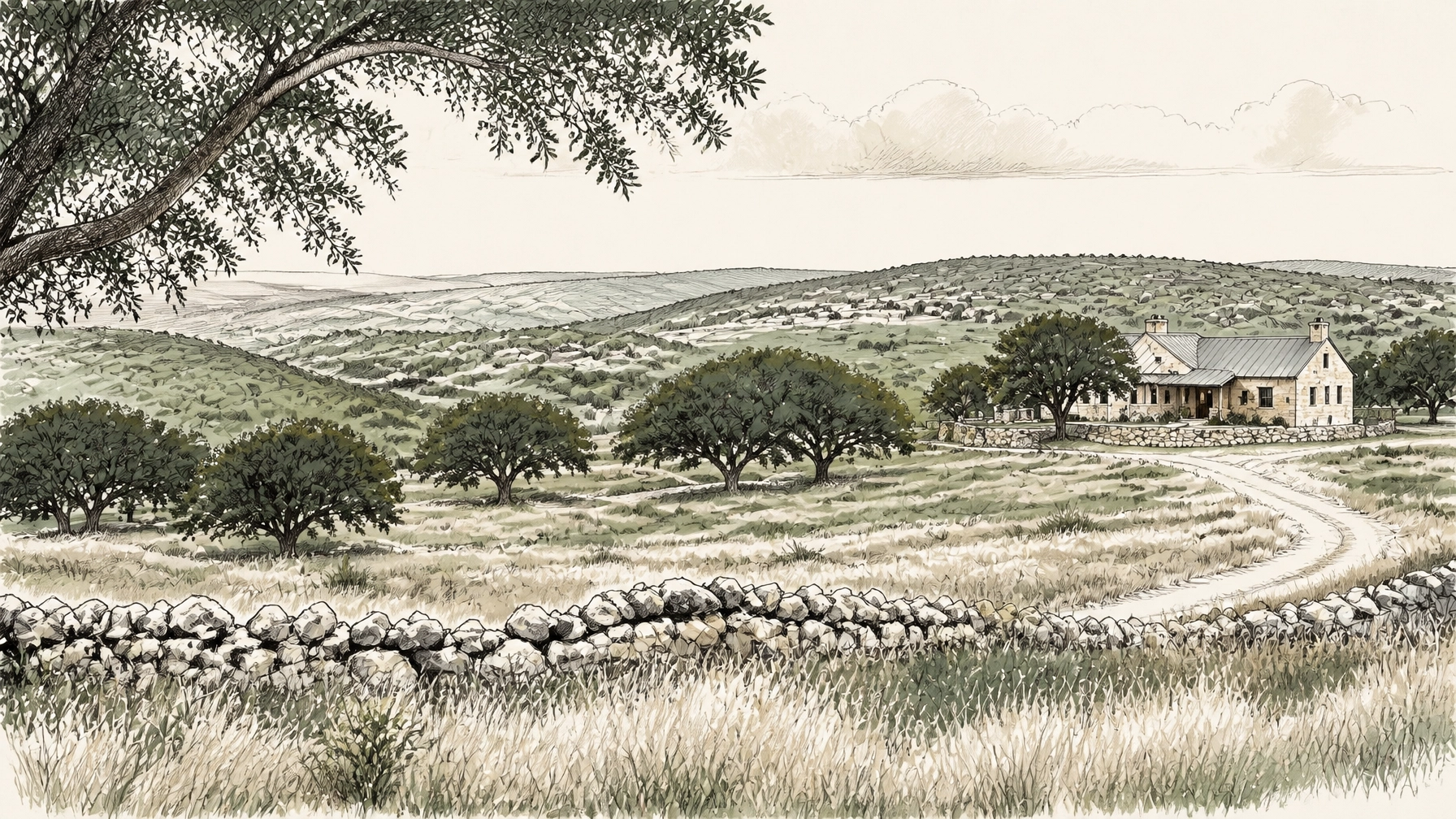
For many retirees, the dream of "Texas Hill Country living" isn't just about a custom home in a gated community. It’s about the horizon. It’s about 20 acres of limestone and live oaks, the quiet hum of a tractor at dawn, and the pride of owning a piece of the Lone Star State.
But there is a significant difference between owning a home with a view and managing a working piece of land. Transitioning from a suburban lot to rural acreage involves a learning curve that is as much about logistics and cash flow as it is about lifestyle.
At Mau Sanchez Capital, we often help clients navigate the financial implications of these transitions. If you are considering trading the city lights for country roads, here is the "real talk" on what it takes to manage Texas land in retirement.
The Infrastructure Burden: Wells, Septic, and Roads
When you move to the country, you become your own utility company. In towns like Boerne or Fredericksburg, you might be on city water. On 15+ acres, you are likely on a well.
Water Wells
In the Hill Country, drilling a residential well through solid limestone can cost anywhere from $15,000 to $35,000, depending on the depth and the geology of your specific site. Once it’s in, you are responsible for the maintenance. Budgeting $500–$900 annually for water testing, treatment, and basic service is a safe baseline, but a failed pump can easily set you back $5,000 in a single afternoon.
Septic Systems
Most Hill Country acreage requires an aerobic septic system due to the rocky terrain. These aren't "set it and forget it" systems. In Texas, aerobic systems often require a maintenance contract with quarterly inspections by a licensed provider, costing roughly $200–$400 per year. If you are designing a new home on acreage, expect the installation of a modern septic system to run between $12,000 and $28,000.
Road Maintenance
That winding gravel driveway that looks so picturesque in the brochure? It requires a "refresh" every few years. Heavy rains can wash out culverts and create ruts that make access difficult for non-4WD vehicles. Periodic grading and new rock are recurring expenses that many first-time land buyers overlook.

The Battle with the Brush: Cedar and Fire Mitigation
"The land takes care of itself" is a myth. In the Hill Country, if you aren't managing the brush, the brush is managing you.
Ashe Juniper (Cedar) is the primary antagonist for many landowners. It is a water-hogging, fast-growing evergreen that can quickly overtake a pasture. Initial land clearing: especially forestry mulching to remove dense cedar: can cost between $2,500 and $6,500 per acre. If you buy 20 uncleared acres, you are looking at a six-figure investment just to see your own hillsides.
Beyond aesthetics, brush management is a safety issue. Texas is wildfire country. Maintaining a "defensible space" around your home is a non-negotiable part of rural living. This means regular mowing, brush-hogging, and fuel reduction. If you aren't physically able (or willing) to spend your weekends on a tractor, you will need to budget for professional land management services.
The Tax Shield: Ag vs. Wildlife Exemptions
One of the biggest financial drivers for owning acreage is the 1-d-1 open-space land valuation, commonly known as an "Ag Exemption."
On a 20-acre plot, full market value taxes might be $5,000 or more. With an Ag or Wildlife valuation, that bill could drop to $200. For a retiree, this is a massive win for wealth preservation. However, it isn't a "free" discount.
- Ag Valuation: Requires active agricultural use, such as grazing cattle or harvesting hay. This often means leasing your land to a neighbor or managing livestock yourself.
- Wildlife Management: This is a popular choice for retirees. If your land already has an Ag valuation, you can convert it to Wildlife Management. To keep the tax break, you must perform at least three specific wildlife practices each year (e.g., predator control, providing supplemental water, or conducting bird censuses).
While the tax savings are great, the compliance costs: hiring a biologist to write your plan and documented habitat work: can run $1,000–$3,000 per year.
The Reality of Aging on Acreage
The dream of the ranch often assumes you will always be 60 years old and mobile. But land management is physical. Even with the best equipment, there are gates to open, fences to mend, and wells to check.
When we talk to clients at Mau Sanchez Capital about rural retirement, we discuss the "distance factor."
- Healthcare: How far is the nearest Level 1 trauma center? In rural areas, concierge medicine becomes less of a luxury and more of a logistical necessity.
- Social Isolation: Living at the end of a three-mile dirt road is peaceful, but it can become isolating if you aren't proactive about community involvement.
- The "Exit Plan": Ranches are harder to sell than suburban homes. They require a specific buyer. As you age, you need a plan for when the land becomes a burden rather than a blessing.

Strategy: Working Ranch or Pretty View?
Mau Sanchez, founder of the Texas Retirement Journal and owner of Mau Sanchez Capital, suggests that retirees clearly define their "Ranch Life" goal before signing a contract.
"A common mistake is buying 50 acres when you only really want 2 acres of privacy. The maintenance costs on those extra 48 acres can cannibalize a retirement portfolio if they aren't factored into the long-term cash flow plan." : Mau Sanchez
If you want the view without the work, look for properties in "ranch communities" where a homeowners association handles the Ag exemption and common-area land management. If you want the full experience, ensure your financial plan accounts for the "lifestyle overhead" of rural living: roughly 1% to 3% of the property value annually for maintenance and surprises.
How We Help
At Mau Sanchez Capital, we specialize in helping high-net-worth families bridge the gap between their current wealth and their desired lifestyle. Whether you are liquidating a business to buy a Hill Country ranch or trying to structure a portfolio that supports a high-maintenance property, we provide the fiduciary guidance you need.
Our investment philosophy focuses on transparent, liquid, and publicly traded markets, ensuring that while your wealth is tied up in your "forever ranch," your retirement income remains stable and accessible.

Schedule a private meeting with a fiduciary financial advisor today by calling (512) 593-8380 or by visiting: https://calendly.com/portafoliocapital/15min
Portafolio Capital Management dba Mau Sanchez Capital is a Registered Investment Adviser. This content is for informational purposes only and does not constitute investment advice or a solicitation to buy or sell any security. Advisory services are provided only pursuant to a written advisory agreement.
For more information, visit https://portafoliocapital.com/ or call us at (512) 593-8380.
This article may include stories, scenarios, and perspectives created or assisted by artificial intelligence. Although the individuals and circumstances described may be fictional, the topics are intended to reflect real financial, personal, and lifestyle issues that retirees and individuals commonly face. The content is provided to encourage readers to consider different perspectives that may affect their retirement, regardless of whether they are currently planning, approaching retirement, or already retired. It is intended for general educational and informational purposes only and should not be interpreted as personalized investment, financial, tax, legal, medical, or retirement-planning advice. Individual circumstances vary. Readers should independently verify any information presented and consult appropriately qualified professionals before making financial or personal decisions. No advisory, professional, or client relationship is created through the use of this website.
Leave a Reply